Things to Do in China
Three thousand years, one breakfast noodle, and the sunrise over the Bund
Top Things to Do in China
Find activities and tours you'll actually want to do. Book through our partners -- no booking fees.


Plan Your Trip
Essential guides for timing and budgeting
Climate Guide
Best times to visit based on weather and events
View guide →Day Trips
The best excursions and nearby destinations worth the journey
Explore day trips →Where to Stay
Best neighbourhoods, hotel picks, and booking tips
Find hotels →Travel Insurance
What's required, what coverage matters, and how to get a quote
Read guide →What to Pack
Climate-specific gear, essentials, and what to leave at home
See packing list →When Should You Visit China?
Tap a month for weather, crowds, and highlights
View full year-round climate guide →


Your Guide to China
About China
China hits your nose first. Ginger and diesel mingle on Beijing's Second Ring Road at dawn. By noon, Zhenjiang vinegar drifts through Shanghai's alleyways with sweet-sour funk. Night brings cumin smoke from Xi'an's Muslim Quarter where lamb skewers sell for 3 yuan (43¢) each. This country never learned subtlety. The Great Wall doesn't just stretch.
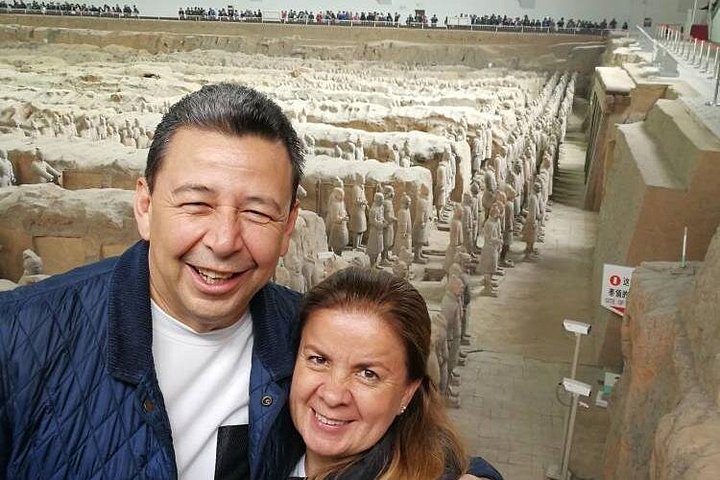
It grabs the horizon in both directions. Terra-cotta soldiers in Xi'an aren't life-size; they're life itself, just 2,200 years old. Beijing's hutongs still echo with bicycle bells and mah-jong tiles clacking. Step onto Shanghai's Nanjing Road and LED screens surround you, bright enough to power a small city. The trade-off is real.
Summer in Guangzhou feels like breathing through a wet towel. Hotel prices in Beijing triple during Golden Week. But where else can you slurp hand-pulled Lanzhou noodles at 6 AM in a fluorescent room with plastic stools? Three hours later, stand before a Tang dynasty mural that hasn't seen daylight since 850 AD. That's China. Breakfast costs less than coffee back home. The memories don't come with a price tag.
Beijing rewards more planning than most capitals, which Great Wall section to commit to (Badaling for ease, Mutianyu for the quieter walk), which hutong lanes remain residential and which have turned to souvenir rows, whether October's clear skies justify Golden Week pricing, and TTDI's Beijing decision map sorts those trade-offs at the resolution this country page deliberately skips.
Shanghai runs on decisions the rest of the country doesn't prepare you for, whether to cross the river to Pudong or stay on the Bund side, the French Concession on foot versus the Old City by metro, how long the October sweet spot lasts before the damp cold arrives, so TTDI's Shanghai dossier works through them at the street level this country page can't reach.
Travel Tips
Transportation: Download the 12306 app before landing. It's the only reliable way to book high-speed trains. Beijing to Shanghai runs 553 yuan/$76 second class. In cities, Metro cards work across systems. Shanghai's Shanghai Public Transport Card costs 20 yuan ($2.80) refundable deposit. Subway rides drop to 3 yuan (42¢). Skip airport taxis. They'll quote 200 yuan ($28) for what should be a 60 yuan ($8.40) Didi ride. The bullet train from Beijing South to Tianjin is faster than most flights. Thirty-three minutes for 54 yuan ($7.50).
Money: China runs on mobile payment. Ninety-eight percent of vendors prefer WeChat Pay or Alipay over cash. Tourists can now link international cards to Alipay via TourPass. No Chinese bank account needed. ATMs charge 15-25 yuan ($2.10-$3.50) per withdrawal. Take out larger amounts. Hotels and major restaurants take cards. That street cart selling jianbing won't. Keep 100 yuan ($14) in small bills for temples and street food. Most vendors can't break 100 yuan notes for a 6 yuan bowl of noodles.
Cultural Respect: Never stick chopsticks upright in rice. It's funeral symbolism. When drinking tea with others, tap two fingers on the table to say thanks. Legend says it mimics bowing. In temples, cover shoulders and knees. At Beijing's Lama Temple, security will hand you a shawl for 10 yuan ($1.40) if you're underdressed. Personal space doesn't exist on the Beijing subway at 8 AM. Expect shoulder-to-shoulder contact. That same proximity means locals will help if you look lost. Accept the help. It's genuine.
Food Safety: Follow the locals' rule. If the wok is smoking and there's a queue, the food is safe and fresh. Street food carts in Shanghai's Wujiang Road or Beijing's Ghost Street display health inspection cards. Look for the blue 'A' grade. Tap water isn't drinkable. Hotels provide kettles. Boil it or buy 2-liter bottles for 5 yuan (70¢). Avoid raw vegetables from street stalls unless you can see them blanching in boiling water. The hot pot restaurant on the 6th floor of Beijing's Sanlitun Taikoo Li is safer than most. They bring the broth to a rolling boil at your table, killing everything.
When to Visit
April and October are China's sweet spots. Beijing hovers around 20°C (68°F) with clear skies good for the Great Wall. Xi'an's terra-cotta warriors remain visible through morning mist that burns off by 10 AM. May brings cherry blossoms to Beijing's Yuyuantan Park. Hotel prices jump 30%. Summer from June to August is brutal.
Shanghai hits 35°C (95°F) with 85% humidity. Guangzhou feels like 40°C (104°F) in soup air. Beijing's air pollution index often exceeds 200. The payoff is hotel rates drop 25-40% outside tier-one cities. September offers the Mid-Autumn Festival. Mooncakes everywhere, prices spike 20%. October's Golden Week sees domestic tourism explode.
Expect every train seat booked and hotel rates doubling. Winter from December to February brings Beijing's clearest skies. Great Wall photos are spectacular. Temperatures drop to -10°C (14°F). Harbin's Ice Festival pulls domestic tourists north. Rooms there cost 800 yuan ($112) in January versus 200 yuan ($28) in March.
March is the wildcard. Cherry blossoms in Wuhan. No crowds at the Forbidden City. Hotel rates still 20% below peak. Budget travelers should aim for November-February. Exclude Chinese New Year when everything shuts for a week. Luxury seekers prefer April-May. Families with kids book October when weather cooperates with school holidays.
More Ways to Experience China
Tours, day trips, and local experiences curated by on-the-ground operators.
Didn't see anything interesting yet?
Browse Viator's full catalog of tours, day trips, food experiences, and private guides in China.
See All China Tours on Viator