
Things to Do in China in September
September weather, activities, events & insider tips
Shoulder Season · Good Value
September Weather in China
Temperature, rainfall and humidity at a glance
69°F (21°C)
High Temp
51°F (11°C)
Low Temp
5.3 inches (135 mm)
Rainfall
70%
Humidity
⚠ Typhoon season remains active along the southeastern coast through September. Fujian, Zhejiang, and Guangdong provinces face the highest risk, with storms capable of grounding flights and flooding coastal cities for one to three days. Monitor forecasts if your itinerary includes Shanghai, Xiamen, or Hong Kong. Watch closely.
⚠ September is the peak rainfall month in several regions. Landslide risk increases on mountain roads in Sichuan, Yunnan, and Guizhou, occasionally closing sections of highway for hours or days. Check road conditions before driving or busing through mountainous terrain. Stay informed.
⚠ UV index reaches 8 nationally and intensifies at altitude. Lhasa at 3,650 m (11,975 ft) and Lijiang at 2,400 m (7,870 ft) expose skin to radiation levels that cause sunburn in under 20 minutes even through light cloud cover. Reapply sunscreen every two hours at elevation. Protect yourself.
Is September Right for You?
Weigh the advantages and considerations before booking
Advantages
- + Beijing enters what locals call qiu gao qi shuang, 'autumn high and air crisp,' and that is not an exaggeration. The smoggy haze that blankets the capital through summer lifts in September, revealing skies so blue above the Forbidden City that you will wonder if you are looking at the same city. Temperatures around 21°C (70°F) make walking the hutong alleyways near Nanluoguxiang comfortable for the first time since May. The Great Wall sections at Mutianyu and Jinshanling become pleasurable hikes rather than endurance tests.
- + Hairy crab season opens in late September. If you have never eaten a Shanghai mitten crab steamed until the roe turns sunset-orange and dipped in black Zhenjiang vinegar with slivered ginger, you have missed one of the great eating experiences in East Asia. The crabs from Yangcheng Lake in Jiangsu set the standard. Restaurants across Shanghai and Suzhou start hanging their 'first catch' banners. The flavor is rich, briny, and faintly sweet. No description fully prepares you.
- + The summer tourist crush evaporates almost overnight when Chinese schools reopen on September 1st. Sites that were shoulder-to-shoulder in August, the Terracotta Warriors in Xi'an and the Li River cruise departure in Guilin, drop to manageable levels within the first week. You can stand in front of Pit One at the warrior complex and take in the sheer scale of 6,000 clay figures without someone's selfie stick in your peripheral vision. Book now.
- + Mid-Autumn Festival, one of China's most atmospheric traditional holidays, typically falls in September. Experiencing it here rather than reading about it is the difference between knowing the moon is important to Chinese culture and watching an entire civilization pause to look up at the same sky. Families gather for mooncakes. Paper lanterns line the lakefronts in Hangzhou and Kunming. The parks in Beijing and Chengdu stay open late with performances and moon-viewing pavilions lit in amber.
Considerations
- − September is the wettest month in many parts of China, and the rainfall is not politely distributed. Southern regions like Guangxi, Guizhou, and parts of Yunnan can see torrential multi-day rains that turn mountain trails into mud chutes and delay buses on winding roads. The Li River in Guilin sometimes floods to the point where bamboo raft trips are suspended entirely for days at a stretch. Check conditions before committing to a fixed Guilin itinerary. Pack accordingly.
- − Typhoon season runs through September along the entire southeastern coast, from Guangdong to Zhejiang. A direct hit is relatively rare for any single city, but near-misses bring bands of heavy rain and wind that can ground flights in Shanghai, Xiamen, and Hong Kong for a day or two with little warning. Domestic flight delays cascade fast in China's congested airspace. A typhoon skirting Fujian can delay your Beijing-to-Chengdu connection even though neither city is anywhere near the storm. Build buffer days.
- − Golden Week, China's massive October 1-7 national holiday, casts a long shadow backward into late September. Accommodation prices in popular destinations like Zhangjiajie, Huangshan, and Lijiang start climbing around September 20th as early travelers try to beat the crush. Train tickets for routes out of Beijing and Shanghai on September 30th sell out within minutes of release. If your trip spans the September-October boundary, book transportation at least 30 days ahead. Otherwise, you may be stranded.
Best Activities in September
Top things to do during your visit
September in China arrives on a wave of monsoon moisture, the wettest month of the year delivering more than five inches of rain across much of the country. Temperatures settle into a comfortable range, highs around 21°C and lows near 11°C, a reprieve from the sweltering summer that blankets Beijing and Xi'an through July and August. The air carries a dampness that softens distant mountain ridges into watercolor silhouettes, and the scent of wet earth rises from temple courtyards and terraced hillsides alike. Chinese families have sent their children back to school after the summer holiday crush, which means the Great Wall's watchtowers thin out, the Terracotta Warriors stand guard before fewer shuffling crowds, and the Tibetan plateau opens to trekkers under skies that alternate between brilliant cobalt and fast-moving pewter clouds. This is a shoulder season in the truest sense across China, a month when the country exhales after the National Day rush has not yet begun (that wave crests in early October during Golden Week). Rain comes in bursts rather than all-day curtains, afternoon downpours that rinse the smog from northern cities and leave evenings cool enough for a light jacket. In Beijing, the last of the summer humidity breaks, and the scent of roasting chestnuts begins to appear on street corners near Wangfujing. In Tibet, September sits at the tail of the trekking window, when wildflowers still fringe the high passes and the Himalayan panorama sharpens after each storm clears. For travelers willing to carry an umbrella and layer against variable conditions, September rewards with elbow room, softer light for photography, and a pace that feels more local than tourist.

Tibet Tour 8 Days Lhasa to Everest Base Camp Small Group Tour
guided_experienceThe eight-day route from Lhasa to Everest Base Camp compresses the spiritual and physical extremes of Tibet into a single arc, beginning among the juniper-smoke-scented prayer halls of the Potala Palace and ending at the wind-scoured moraine where the north face of Chomolungma fills the sky. The small group format means your Land Cruiser stops when the driver spots a herd of wild kiang galloping across the Changtang grassland or when afternoon light turns Yamdrok Lake into a disc of molten turquoise. At base camp itself, the cold bites through every layer at dawn. But the clarity of the Himalayan air at 5,200 meters makes the pre-sunrise stars so dense they cast faint shadows on the gravel.
Standing where the earth's crust buckles highest, watching prayer flags snap against a sky that feels close enough to touch, recalibrates every sense of scale you brought with you.
Insider tip: Spend your first two nights in Lhasa walking slowly and drinking butter tea rather than sightseeing aggressively. Acclimatizing properly at 3,650 meters prevents altitude sickness from ruining the drive to higher passes later.
This month: September is the final month of Tibet's accessible trekking window before winter storms begin closing high passes. Wildflowers still dot the valleys and rainfall on the plateau remains relatively low compared to July and August.

Beijing: Mutianyu Great Wall Private Tour
private_tourThe Mutianyu section of the Great Wall rises through a canopy of dense chestnut and oak forest northeast of Beijing, its crenellated watchtowers climbing a ridge so steep that each stone step feels earned. A private tour means arriving before the cable car queues form, when the only sound is wind hissing through the arrow slits and the occasional screech of a kestrel circling above Tower 14. The stonework here was restored with care rather than rebuilt from scratch, so the wall retains its weathered granite texture, cool and rough under your palms, with moss colonizing the joints between blocks.
Mutianyu delivers the well-known wall-snaking-over-mountains photograph without the claustrophobic crowds of Badaling, and the surrounding forest turns the approach into a genuine hike.
Insider tip: Ask your driver to take the Huairou expressway and aim for the leftmost parking area near the toboggan run exit. From there a short walk reaches the quieter eastern towers where you can photograph the wall curving into the distance without a single other visitor in frame.
This month: September rain can leave the wall's stone steps slick. But morning fog rolling through the forested valleys below the watchtowers creates some of the most dramatic photography conditions of the year.

Beijing to Xi'an See Terracotta Warriors with Bullet Train Round Trip Transfer
otherThe bullet train from Beijing to Xi'an covers 1,200 kilometers in under five hours, depositing you from the cool geometry of Beijing's modern rail terminal into the wheat-dust air of Shaanxi province, where the Terracotta Warriors stand in their vast earthen pit exactly as they were unearthed. Pit 1 remains the knockout: more than six thousand clay soldiers arranged in battle formation, each face individually sculpted, the faint traces of original pigment still visible on a shoulder plate or an archer's sleeve if you lean close. The silence inside the hangar-like exhibition hall amplifies every detail, the crunch of gravel under shoes, the low murmur of guides explaining why no two hairstyles repeat among the ranks.
Seeing the scale of Qin Shi Huang's buried army in person, row after row of life-sized figures stretching into the dim recesses of the pit, is one of those rare encounters where reality outstrips every photograph.
Insider tip: Head to Pit 3 first, the smallest and least visited, where the command headquarters figures stand in a tight formation that reveals the sculptors' individual artistry far better than the overwhelming sweep of Pit 1.

Tibet Tour 15 Days Lhasa to Kailash Trekking Small Group via EBC
adventureFifteen days from Lhasa to Mount Kailash via Everest Base Camp is the definitive overland crossing of the Tibetan plateau, a journey that threads through landscapes so vast and empty that the horizon bends. The route climbs past turquoise sacred lakes rimmed with salt deposits that crunch underfoot, crosses passes above 5,000 meters where the air tastes thin and metallic, and arrives at Kailash's black pyramidal summit, sacred to four religions and circled by pilgrims who prostrate themselves full-length on the 52-kilometer kora path. The physical demands are genuine: you will feel the altitude in your temples, taste iron on your tongue during steep sections, and sleep in guesthouses where the wind moans through window frames all night.
The three-day circumambulation of Mount Kailash is one of the last great pilgrimages on earth, a walk that strips away comfort and replaces it with a silence so total it becomes its own sound.
Insider tip: Pack electrolyte powder and dissolve it in your water bottle at every stop above 4,500 meters. The dry plateau air dehydrates faster than you expect, and headaches from fluid loss mimic altitude sickness, leading to unnecessary evacuations.
This month: The kora around Kailash in September benefits from thinner pilgrim traffic compared to the peak summer months, and the post-monsoon air clarity on the western plateau reveals views of Gurla Mandhata across Lake Manasarovar that are obscured by haze earlier in summer.

Beijing:Mutianyu Great Wall and Summer Palace Private Tour
culturalCombining Mutianyu's Great Wall with the Summer Palace in a single day creates a study in contrasts across China's imperial history: the morning spent on a military fortification where the smell of sun-warmed stone mixes with pine resin, the afternoon gliding across Kunming Lake on a dragon boat while willow branches trail in the green water. The Summer Palace's Long Corridor, stretching 728 meters along the lakeshore, is painted with more than 14,000 miniature scenes from Chinese mythology and history, each panel no larger than a dinner plate, the pigments still sharp after repeated restorations. The shift from the wall's rugged granite to the palace's lacquered pavilions and marble balustrades traces the arc from frontier defense to imperial leisure in a single day.
Pairing the wall's raw physicality with the Summer Palace's calculated elegance delivers a day that covers the two poles of Chinese imperial ambition without a wasted hour.
Insider tip: Visit the Summer Palace's Suzhou Street, a reconstructed canal market along the palace's back hill, during the late afternoon when most tour groups have already departed for the parking lot. The low sunlight turns the canal water amber and the shop facades glow in warm tones good for photography.

Online Cooking Class Beijing Dumplings and Cuisine by Sunflowerli Renowned Chef
foodChef Sunflowerli's online dumpling class connects you to a Beijing kitchen where the flour dust hangs in the air and the rhythmic thwack of dough against a wooden board sets the tempo. The session teaches the pleating technique for jiaozi, that precise series of thumb-and-forefinger pinches that seals the crescent without squeezing out the filling, a pork-and-chive mixture fragrant with sesame oil and freshly grated ginger. What elevates this beyond a recipe tutorial is the commentary on Beijing's food culture woven between the folding instructions: why northern Chinese dumplings differ from Cantonese dim sum, how the thickness of the wrapper changes from household to household, and what the sound of a properly seared potsticker should be when it hits a cast-iron pan slicked with smoking-hot oil.
Learning to pleat dumplings from a well-known Beijing chef turns a passive appreciation of Chinese cuisine into a tactile skill you carry home in your hands.
Insider tip: Prepare your filling and cut your wrapper circles before the class starts so you can keep pace with the chef's demonstration without falling behind during the pleating section, which moves quickly.
Where to Stay in China in September
Hand-picked hotels across price tiers for September travellers.
★★★★
Mid-Range
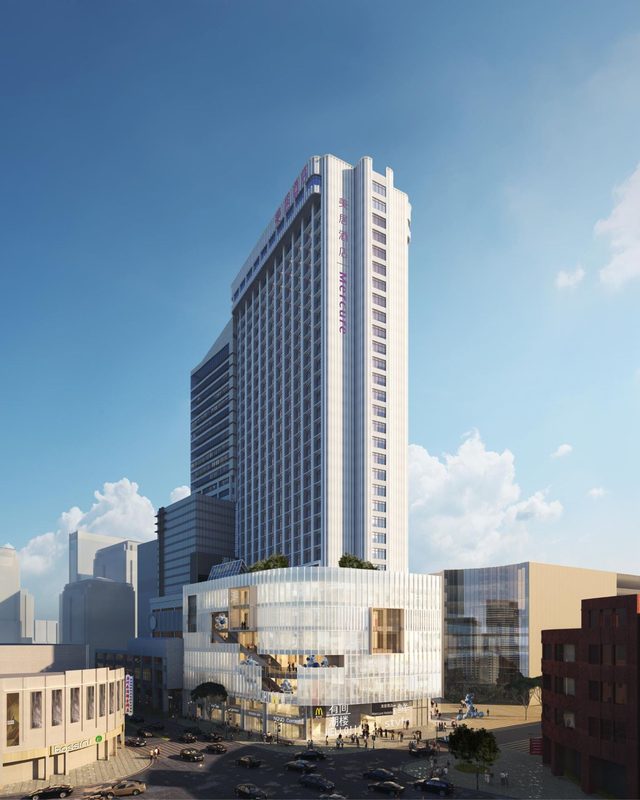
Mercure Guangzhou Beijing Road Pedestrian Street Hotel
From $91 / night
Check Prices on Trip.com →
September Events & Festivals
What's happening during your visit
Late September
Mid-Autumn Festival (Zhongqiu Jie)
Mid-Autumn Festival is one of the emotional pillars of the Chinese calendar. Experiencing it as a visitor rather than reading about mooncakes on a food blog is a different order of experience entirely. Families gather for evening meals that end on balconies and rooftops, watching the full moon while eating mooncakes. These dense pastries are filled with lotus seed paste and salted duck egg yolk. They taste like nothing else in Chinese cuisine. The yolk inside a good mooncake should be slightly grainy, savory against the sweet paste. The whole thing is best eaten in thin slices with strong pu'er tea. In Hangzhou, West Lake fills with boats carrying paper lanterns. In Suzhou, the classical gardens stay open past dark, the moon reflected in pools that Ming Dynasty designers positioned for exactly this purpose. In Beijing, families crowd into Beihai Park to watch the moon rise over the White Dagoba. The holiday carries a three-day public break. Trains and flights book out fast. The atmosphere of an entire country pausing to look at the sky together is worth planning around.
Late September
Shanghai Hairy Crab Season Opening
Not a festival in the ceremonial sense. But treated with the same reverence as one. Yangcheng Lake's first harvest of da zha xie, the mitten crabs whose roe-packed females are considered the greatest seasonal ingredient in Jiangnan cuisine, arrives in late September. Restaurants across Shanghai, Suzhou, and Hangzhou hang banners and compete for the earliest, largest specimens. The proper way to eat one is steamed with nothing but a dish of aged Zhenjiang vinegar mixed with finely julienned ginger, using the small tools included in crab-eating sets that have not changed design in centuries. The texture of the roe is halfway between a custard and a paste, intensely savory and faintly oceanic. Locals pair it with warm Shaoxing rice wine, which cuts the richness and warms you from the inside. The crab frenzy builds through October. Late September is when the first specimens arrive and the excitement peaks.
Packing Checklist
Bookmark this page — your progress is saved between visits
Need the full list with shopping links?
Climate-specific gear, brand recommendations, and what to leave at home.
View China Packing List →Essential Tips
Insider knowledge and common pitfalls to avoid
Insider Knowledge
Set up WeChat Pay or Alipay before you arrive, or plan to carry cash. China's mobile payment infrastructure has replaced cash so completely in cities like Shanghai and Shenzhen that some taxi drivers and street vendors cannot make change for a banknote. International credit cards work at major hotels and chain restaurants. But the noodle shop in the hutong, the metro ticket machine, and the convenience store all expect a QR code. In 2026, several Chinese banks now offer simplified account opening for tourists specifically to enable mobile payments, and some cities accept international card-linked Alipay. Plan ahead.
The 12306 train booking system releases tickets exactly 15 days before departure at 8 AM Beijing time, and popular routes sell out within minutes. High-speed rail between Beijing-Shanghai, Beijing-Xi'an, and Chengdu-Chongqing in late September near the Golden Week holiday moves from available to sold out before most tourists finish breakfast. Set an alarm for 7:55 AM on your booking day, or book through a licensed agency that queues automatically. Speed matters.
Avoid scheduling internal flights on days when a typhoon is tracking toward the southeastern coast, even if your route is Beijing to Chengdu and nowhere near the storm. China's air traffic control system operates on centralized routing, and a typhoon in Fujian creates delays that ripple through the entire domestic network for 24-48 hours. Check typhoon tracking before locking in connections. Be smart.
The three days surrounding Mid-Autumn Festival function as a mini-Golden-Week that most foreign travel guides underestimate. Domestic tourists flood scenic spots like Huangshan, West Lake in Hangzhou, and the Bund in Shanghai. If your trip coincides, swap the famous sites for second-tier alternatives: Moganshan instead of Huangshan, Slender West Lake in Yangzhou instead of Hangzhou, the Suzhou canals instead of Shanghai's waterfront. You get the same beauty at a fraction of the crowd density. Escape the masses.
Avoid These Mistakes
Booking a fixed Guilin itinerary without weather contingency. The Li River bamboo raft experience that every guidebook recommends shuts down when water levels rise too high or visibility drops too low, both of which happen regularly in September. Travelers who have pre-booked a rigid two-day Guilin window with no flexibility end up staring at rain from their hotel lobby instead of rescheduling to a clear day. Build in at least one buffer day for any river-dependent activity in southern China this month. Stay flexible.
Underestimating internal distances and treating China like a small country. Beijing to Shanghai is 1,300 km (808 miles). Shanghai to Chengdu is 1,900 km (1,180 miles). Travelers who try to hit Beijing, Xi'an, Chengdu, and Shanghai in 10 days spend more time in transit than at destinations. Pick two or three cities maximum and connect them by high-speed rail, which is fast, comfortable, and runs on time in a way that domestic flights frequently do not. Slow down.
Assuming September weather is uniform across the country. China spans from tropical Hainan at 18°N to Harbin at 45°N, a north-south distance of 5,500 km (3,400 miles). When Beijing is enjoying its crispest autumn week at 18°C (64°F), Guangzhou is still sweltering at 33°C (91°F) in monsoon humidity, and Lhasa nights drop below freezing. Pack for every city individually, not for 'China' as a single climate. Check forecasts.
Explore More Activities in China
Didn't see anything interesting yet?
Browse Viator's full catalog of tours, day trips, food experiences, and private guides in China.
See All China Tours on Viator